American Meteor Society
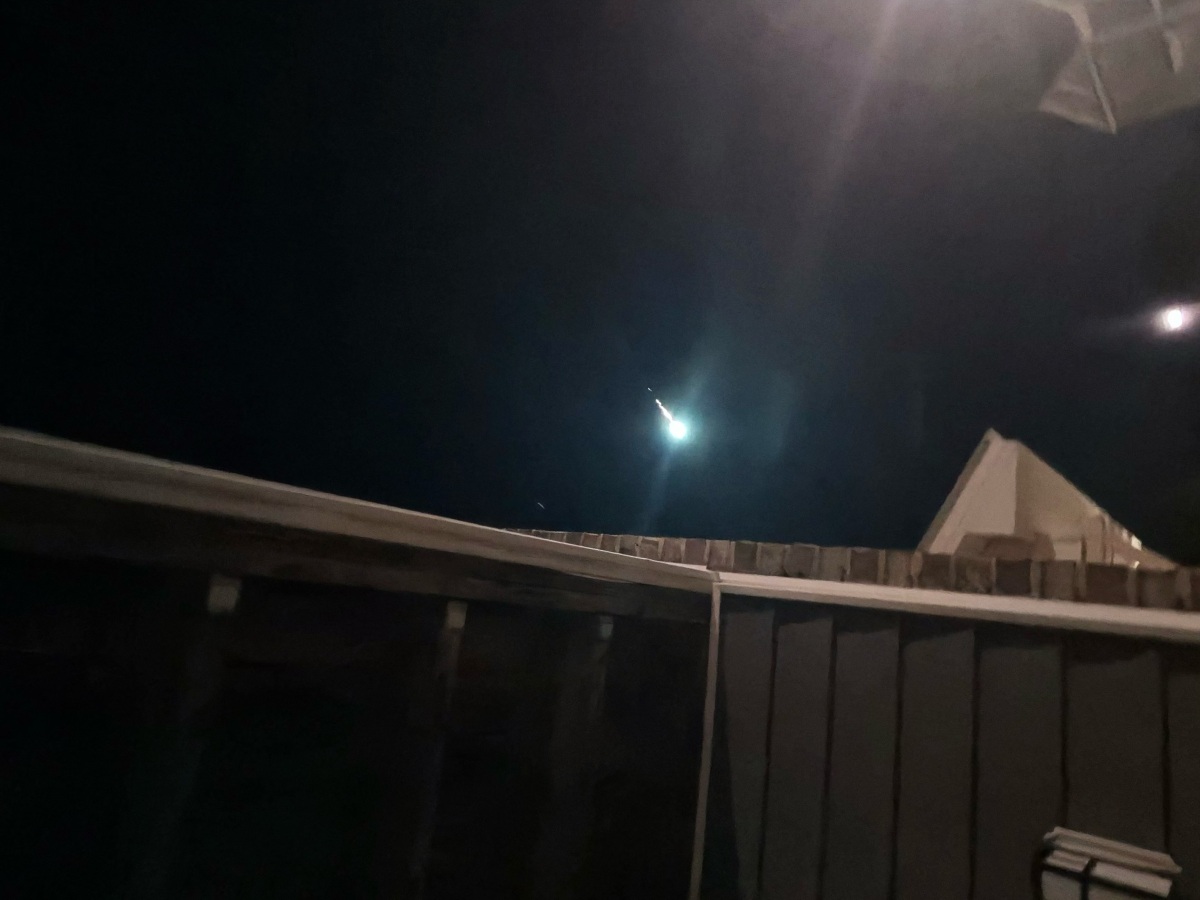
A spectacular bolide lit up the night sky on Sunday evening, June 14th, over a dozen states, sparking awe and hundreds of eyewitness reports. Captured by NASA’s meteor camera network, the celestial event provided a rare glimpse into the dynamics of our solar system as a fragment of an asteroid blazed across the country. To those unfamiliar with these terms, a meteor is the visible flash of light created when a space rock—usually a small piece of an asteroid or comet—enters Earth’s atmosphere at extreme speeds and burns up due to friction. A fireball (or bolide) is simply an exceptionally bright meteor, specifically one that shines brighter than the planet Venus in the night sky. If any part of that space rock survives its fiery descent through the atmosphere and actually hits the ground, that remaining fragment is called a meteorite.
Trajectory and Telemetry Data
On Sunday evening, observers across 12 states—including Alabama, Arkansas, Georgia, Kentucky, Mississippi, and Tennessee—were treated to a brilliant display when a small asteroidal fragment entered Earth’s atmosphere. According to trajectory data provided by the NASA All Sky Fireball Network, the event commenced at 10:26 p.m. CDT. The meteor was first captured at an altitude of 60 miles above Tupelo, Mississippi, moving northwest at roughly 56,000 miles per hour. At its peak, the space rock blazed 16 times brighter than the planet Venus, ultimately traveling 300 miles through the air before disintegrating 34 miles above Missouri’s Mark Twain National Forest. Because it was moving so fast and was only about 3 inches in diameter, it vaporized entirely and did not produce any meteorites on the ground.
Eyewitness and Community Accounts
The sheer scale of the event left stargazers across the region amazed, generating a massive influx of community submissions to the American Meteor Society Event Page. “I saw it in Tullahoma, TN while walking the pups. It was amazing!” remarked one Tennessee resident. Another traveler captured a stunning view on a dashcam while driving on Highway 840, describing it as an “insanely cool” streak that “seemed to take forever to burn up”.
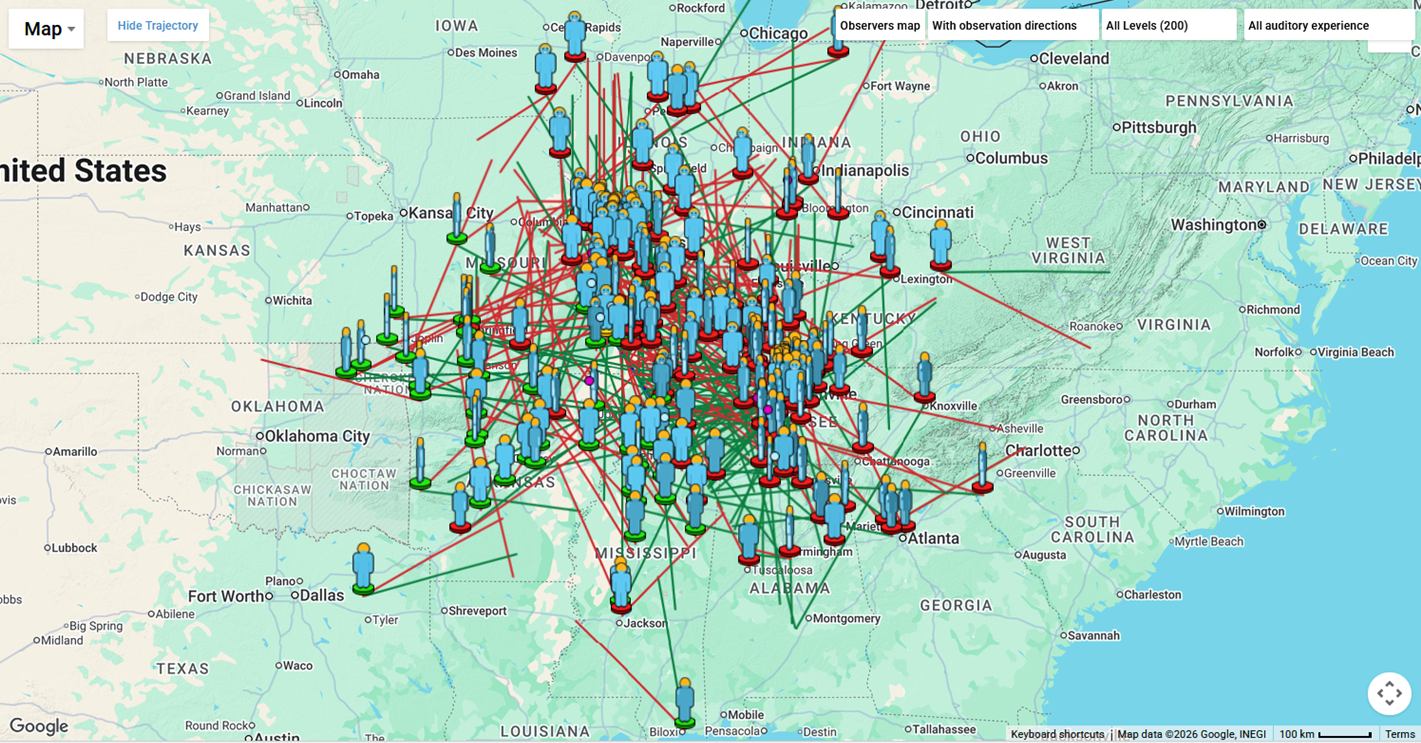
Observers reported brilliant flashes of color ranging from deep blues to vibrant greens, highlighting the beauty and unpredictability of meteors entering our atmosphere. Amateur astronomers and enthusiasts can even view the American Meteor Society Interactive Sighting Map to see a visual plot of exactly where hundreds of eyewitnesses across the country were standing when they caught the flash.
“In Clarksville, TN, where I am personally located, the brilliance personally reminded me of when I saw Halley’s Comet in the 1980s. Although very unexpected, the hue was very bluish-green and had the brilliance of a diamond in the sky, if only for a moment.”
Katie Laney had a special view of this fireball from an aircraft in flight: “I was on a flight from Houston to St. Louis that evening when I witnessed something incredible. As we were passing over northeastern Arkansas, I happened to glance out the window and noticed a bright light reflecting off the airplane wing. My first thought was that another plane must be flying unusually close above us.
Then I realized the wing itself was glowing with a green tint. A moment later, I spotted what looked like a shooting star traveling parallel to the aircraft. It was remarkably bright, with a long green tail and sparks streaming behind it. The sight was so unexpected and breathtaking that I never had a chance to pull out my phone and record it.
Instead, I simply sat there and watched, taking in one of the most amazing things I have ever seen from an airplane. It was a truly unforgettable experience!”
This activity serves as a stark reminder for amateur astronomers to keep their eyes on the sky and track upcoming events using the comprehensive American Meteor Society 2026-2027 Meteor Shower Calendar.
Join the Discussion
As a member of the American Astronomical Society, we love seeing how events of this magnitude spark widespread interest across the scientific community and remind us how vital public reporting is for tracking these fleeting wonders.
Did you happen to catch a glimpse of this incredible streak across the night sky? Whether you were out walking your pets, driving down the highway, or just looking out your window, we want to hear about it! Fill out a fireball report if you have not already done so, and feel free to drop a comment below to share your own eyewitness experience, what colors you noticed, or how it compared to other celestial sights you have witnessed over the years. Let’s get the discussion started!